
Types of clothes dryers: How do you choose the right one for your home?

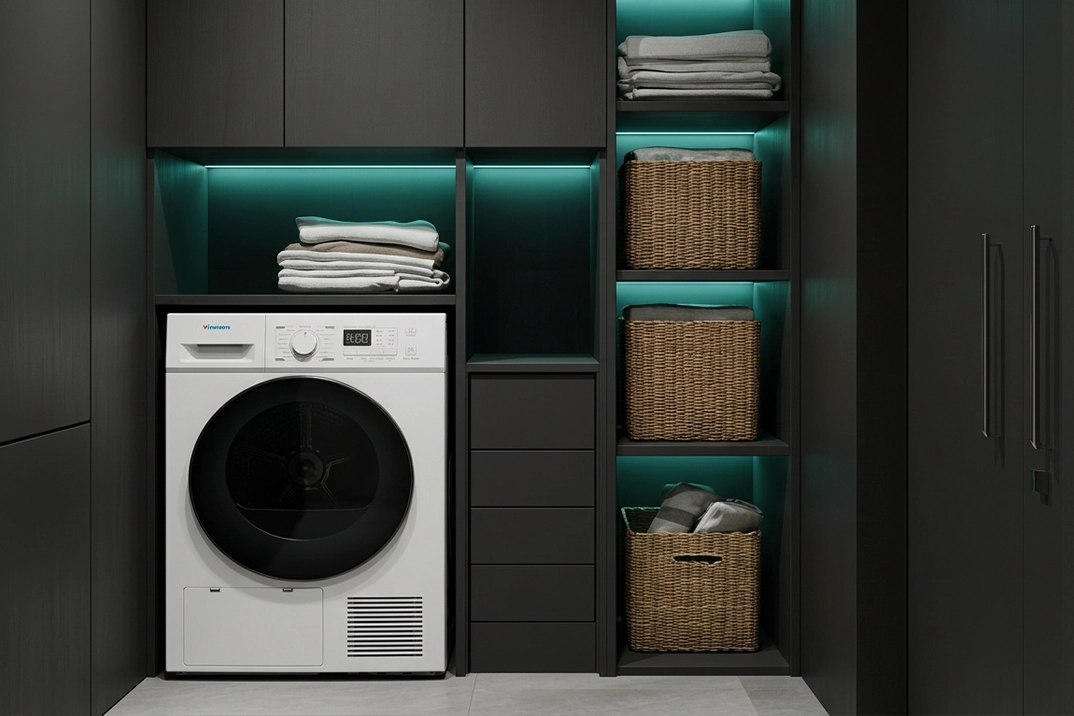
When comparing Clothes dryersMany people start with the capacity or number of programs, when the more important question is: Which type of dryer best suits the installation location and method of use? Because the difference between dryers is not only in appearance, but also in the way they handle moisture, the flexibility of installation inside the house, and the efficiency of operation in the long term. In Saudi Arabia, the Electric clothes dryers Among the devices subject to energy efficiency labeling according to the SASO 2883making efficiency an important factor when buying, not capacity alone.
Why does the choice start with the type of dryer before anything else?
The reason is simple: Because Types of Clothes Dryers They don't all work the same way. Some dryers need an external air outlet, some collect moisture inside a tank, and some reuse heat within the drying cycle itself. This difference directly determines where the appliance can be placed, and whether it is suitable for an indoor laundry room, limited space, or frequent use throughout the week. Official buying guides explain that the main types on the market are: Ventilation blowers, condensing blowers, and heat pump blowers.
Ventilation dryers: Suitable when external ventilation is available
If you have a space that allows for a clear air outlet, this category may be a logical choice. Ventilation dryers They work by expelling moist air to the outside through a hose or vent, so they need to be located close to a window, exterior wall, or suitable ventilation point. This type is straightforward in concept, but it's not always the most flexible if the installation is indoors or doesn't have proper outdoor ventilation.
Condensation blotters: more flexibility at home
If your priority is to install the dryer indoors without the need for an outside air outlet, here's where Condensation blotters as a very practical option. This type does not expel moisture to the outside, but converts it into water that is collected in a tank or drainage system depending on the design. It is therefore Condensation Dryers More suitable for homes that want more flexibility in installation, especially in laundry rooms or well-ventilated interior spaces.
Heat pump dryers: When efficiency is a priority
If your biggest focus is on labor savings and gentler garment care, the Heat Pump Dryers Worth serious consideration. This type reuses the hot air within the drying cycle instead of generating new heat each time, so it's typically seen as more energy efficient than traditional condensing dryers. Anecdotal evidence also suggests that this type operates at lower temperatures, making it gentler on fabrics, but it may take a little longer on some cycles, and often has a higher initial price tag.
What is the practical difference between the three types?
Instead of looking at Types of Clothes Dryers As theoretical categorizations only, they are best understood in this practical way:
- If you have a ready-made external ventilation outlet, a ventilation dryer may be suitable.
- If you want more flexibility indoors without an outdoor vent, a condensation dryer is probably closer to your use.
- If your priority is lower energy consumption and long-term fabric care, a heat pump is the most powerful option when comparing.
In other words: There is no one type that can be characterized as the best for everyone. Where to install + How often to use + Your priority between speed and efficiency.
Is capacity or type more important?
Type first, then capacity.
Because the choice of Clothes dryers It starts with knowing whether or not you need external ventilation and whether or not operational efficiency is a priority for you. Only then does capacity come into play. If daily or family use is regular, medium capacities such as 8 kg can be very practical in many cases, while 10 kg More comfortable for those who have larger quantities or more washings during the week. This is also in line with the variety of capacities offered to the kitchen within the dryer category.
Don't forget the energy efficiency label when comparing
Even after you've determined the type of blotter, it's still important to pay attention to Energy Efficiency Card. The Saudi Standards, Metrology and Quality Organization (SASO) clarifies that efficiency labels aim to reduce energy consumption and enable consumers to know the efficiency of the product before purchasing. Electric clothes dryers are already included in the products subject to this regulation. So, when comparing two dryers in the same category, don't just look at capacity or programs, but also efficiency.
When are condensation blotters the best choice?
be Condensation Dryers is a powerful option when:
- You want an easier indoor installation without an outdoor vent.
- You prefer a device that is practical and easy to use.
- You don't necessarily need the highest possible operating efficiency as much as you need a flexible and straightforward solution.
This is consistent with the fact that there are several condensing models with capacities of 8 and 10 kg, making this category the most present when looking for a practical solution for home use.
Conclusion
Choosing Clothes dryers It doesn't start from the color or brand name, but from understanding the right type for your home first.
If your priority is easy indoor installation, start by looking at Condensation blotters. If your biggest concern is efficiency and long-term fabric care, the Heat Pump Dryers deserves to be among the first comparisons. If you have a suitable external ventilation outlet, the Ventilation dryers on the market as well. Then comes the practical comparison in capacity, software, energy efficiency, and suitability for your daily use.
